Showing posts with label Roger Corman. Show all posts

The Halloween Top 13: The Devil Made Me Do It #6 - The Masque of Red Death (1964)

There's something magical about putting together Edgar Allen Poe and Vincent Price. It's like peanut butter and jelly, Scotch and Soda, or the Captain and Tennille, two great tastes that taste great together. Pairing them is a debt horror fans owe to director Roger Corman and the fine people over at American International Pictures. Tonight's selection on The Halloween Top 13: The Devil Made Me Do It was Corman and Price's sixth venture into the macabre world of Poe, and many say it is the high point of their collaborations. Both star and director were at the height of their powers. and with the lavishly appointed sets and powerhouse co-stars, you have to wonder if it's really the work of ....oh, I dunno....Satan! Coming in at #6, all the flaming apes, single toned rooms, and Vincent Price extolling the virtues of the "Lord of Lies" in The Masque of Red Death (1964).

Prince Prospero (Vincent Price) was an evil man before the Red Death started ravaging the village nestled in the shadow of his castle. When he uncovers the plague's existence, he gathers all his nobles within the castle walls where he promises to keep them safe and secure until the disease runs its course. He kidnaps Francesca (Jane Asher), a girl as pious in her Christianity as Prospero is in his Satanism, with the intent to break her will and bring her into his evil fold. Exposing the girl to the decadence of rich, their cruelty and torment of each other, the Prince begins to weaken her resolve. Little does he know that the coup-de-gras he has planned for his guests, a Masquerade, will also welcome an unwanted appearance by death. As this unfolds, a subplot follows Hop Toad (Skip Martin) and his love for dwarfish dancer Esmeralda (Verina Greenlaw). Offended by Alfredo (Patrick Mcgee) striking Esmeralda, Hop Toad lures the noble into a deadly game.

The Masque of Red Death is a pastiche of two of Poe's stories, "The Masque of Red Death" and "Hop Frog". Reading "The Masque", it is quickly obvious that there is no misguided love story or red hooded figure dispensing warnings to villagers. Instead it is almost entirely about mood and tone. Poe sinks the reader into Prospero's opulent world devoid of compassion or pity, and, leaving the moral to the reader, he then kills off the Prince and his party. The 1842 story runs barely five pages in my well loved Poe collection, and it's something of a credit to screenwriters Charles Beaumont ("The Twilight Zone", Brain Dead, The Intruder) and R. Wright Campbell (Man of a Thousand Faces, Alice in La La Land) they so adeptly fleshed out the tale. One of the tools they used was to include "Hop Frog" as a subplot. Condensed from the story's seven victims to just one, the tale of a mean spirited joker getting what he deserves plays perfectly against the backdrop of the decadent excesses of heartless Satanists.

Much of the credit for the film's success has to be given over to Corman and Price. Roger Corman is thought of as something of a hack, but looking at the lush color palette and the lavish sets (borrowed from the filming of Beckett), it has all the visual brilliance of Blood and Black Lace or Susperia. Corman knew how to get the right people for the job, and the film's look wasn't hindered by cinematographer and future film director Nicolas Roeg (Don't Look Now, The Man Who Fell To Earth). Corman also got some great performances out of his cast. Price is at his menacing best as the lecherous Satanist. He's so delightfully slimy that he practically oozes around the screen. Jane Asher (who was Paul McCartney's gal pal at the time and brought the then unknown (to Roger Corman) Beatle to the set) is the picture of loveliness, and her  decent into nihilistic numbness is well played and believable. The lovely Hazel Court appears as a would-be bride of Satan, but her plotline is disposable and the only part of the film that felt like padding. Skip Martin clearly has a good time playing the role of the vengeful dwarf, but it was Clockwork Orange's Patrick Mcgee who shines in their scenes. While Prospero seems the noble, refined devil worshiper, Mcgee's Alfredo seems only a hair away from being a snarling beast.

Much has been made of the meaning of Poe's story, though it seems fairly obvious to me. The rich can't hide from the problems of the poor forever. Someday, no matter how protected they feel, if nothing is done to change economic and social divisions, it will become their undoing. (Perhaps this should be the official horror selection of the "Occupy" movement.) It's interesting the screenwriters chose to cast Prospero as a Satanist because his self centered hedonistic worldview would be one shared by Anton LeVay in the Satanic Bible released five years after The Masque of Red Death. The story of "Hop Toad" also melds well with Prospero's fall. In the film, both Alfredo and Prospero are men undone by their cruelty and hubris and receive just rewards for their worship of the Lord of Lies.

That brings us to the end of another installment of The Halloween Top 13: The Devil Made Me Do It. I had a great time talking about The Masque of Red Death, but tomorrow we get down to the real nitty gritty as the Top 5 films begin to be revealed. Halloween is less than a week away, better go out and get some candy just in case the devil comes knocking on your door.

Stick around after the trailer for the next reader submitted list, this time from the Empress of Paracinema, Christine Makepeace!

Bugg Rating


If you're not reading Paracinema Magazine and you're a fan of The Lightning Bug's Lair, then somewhere along the way the Devil has lead you astray. Get yourself back on the straight and narrow and order a copy today, but until then check out these choices the Mistress of the Paracinemist (which is similar to firmament, but more suspenseful), Christine Makepeace. 

Devils and demons... That's a pretty big umbrella, and many varied things can fall under it. I had this super creative idea to like, make a list of my favorite minions. What fun is that though? I want to talk about the big guy himself! So here are my top 5 favorite films showcasing the dude below.

Legend - Arguably the best depiction of The Devil ever placed on film.

The Devil's Advocate - Al Pacino is a wild-eyed papa Devil. This is the film that made me start to question my Pacino allegiance. I can't deny the entertainment value it provides. (Editor's Note: This)

The Omen - The Devil is a sweet wittle boy! Yes, please!

Rosemary's Baby - The Devil (it wasn't just some lowly demon, right?) rapes Mia Farrow. That pretty much says it all.

Prince of Darkness - It's not a list without some Carpenter. Here, The Devil is a liquid. Yea. That's awesome. I like my Devil to be versatile.

The Eddie Romero Files: Case 1- Black Mama, White Mama (1973)

Case File: Eddie Romero-01
Reason for Inquiry: Subject has made a number of cult films that have gone unrecognized for many years.


Background: The subject of this investigation is well respected Filipino director Eddie Romero (a.k.a The Other Romero). Born in 1924 in the Philippines, the subject began selling short stories to local papers at age 12 and graduated to film scripts by the time he was twenty three years old. Romero won award for his writing and eventually his direction for a number of films in his native country, but in 1957, he embarked on a different path. Romero began to make war films with the express desire to export them to the West. While he never broke through, a number of the films reached an American audience, including Day of the Trumpet. It got the attention of actor Burgess Meredith (a.k.a The Riddler a.k.a Mick) who then conspired with the subject on a film entitled The Kidnappers in 1958.

Furthering his desire to break into the American market, he made a number of low budget horror films, and it should be no surprise that a thrifty director making movies for less than nothing would get the attention of Roger Corman. During these years, Romero turned out genre and cult fare on par with any of his contemporaries and worked with shady characters such as John Saxon, Pam Grier, Jack Hill, Sid Haig, and Cherrie Caffaro.l. Then in 1975, Romero moved back to the Philippines once again taking on the mantle of Award winning film maker. While the subject might have perfected a perfect cover, this report is set to blow the lid off Romero’s little remembered genre entries. All that's left is to collect the research from our man in the field, T.L. Bugg.

Agent’s Report: When I first got asked to go into the field by the CIA (Cinema Intelligence Agency), I didn’t go because I knew such a thing didn’t exist, but when a couple of hardened agents showed up on my doorstep and threatened to make me watch Merchant Ivory flicks while strapped to a chair all “Kubrick style”. I don’t usually cave under pressure, but I could have changed my named to Carlsbad J. Caverns at they moment. So I took the file they wanted me to look at, and I realized why I was chosen for the job, I had already seen one of Romeo’s films. This past association with the subject was going to go a long way, but as I dug deeper into his dossier I found a film that I’d heard of many times but never seen. It turned out that the film in question, Black Mama, White Mama, was to be my first assignment.

Made in 1973 right during the middle of the blaxploitation boom, Romero’s film, produced under the prodigious banner of American International Pictures, starred one of the icons of the genre, Pam Grier, as well as cult cinema legend Sid Haig. The script by H. R. Christian, based on a story by Angels As Hard as They Come author Joe Viola and future director Jonathan Demme, combined a flash of blaxploitation with a healthy dose of Jack Hill inspired “women in prison“ drama. With all of these factors coming together, it is no wonder that Black Mama, White Mama is easily Romero’s most recognized film in the United States.

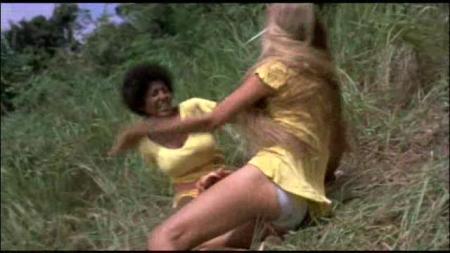
The film kicks off with a sleazy introduction that could serve as a perfect primer to Romero’s work. Lee (Pam Grier), on the run from a drug kingpin whose fortune she stole, and Karen (Margaret Markov), the girlfriend of the local revolutionary leader, get thrown in to a Filipino women‘s prison. They are stripped and put in the shower, and as they folic and play, squirting each other with water as if being in a jail shower was the same as going to a water park, a female guard spies from a hole in the nest stall over and masturbates. So, yeah, if you don’t like a hefty dollop of sleaze in your ‘70’s cinema, his work with AIP and others around that time will not be for you. Now, if you’re like me, and you enjoy flicks where chicks kick a lot of ass while sporadically showing skin, shooting guns, or having catfights, Eddie Romero is your man.

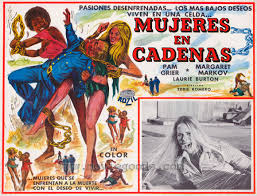
While Black Mama, White Mama is often billed as a “women in prison” film, Lee and Karen spend the majority of the film on the run from their captors, the drug runners, and even unknowingly Karen’s Guevara-esque boyfriend. They do spend most of that time chained to each other, and this leads to a requisite knock down drag out fight between the two as well as giant plot holes such as how the pair both manage to don nun’s habits while handcuffed. Not that picking apart a film like Black Mama, White Mama does it any kind of service. The girls naturally put aside their differences in the end, and Romero keeps the film well paced right up to the climax, a massive gun battle on a pier.

Grier gives a midrange performance that doesn’t rank near her best work, but it’s Pam so I forgive her. Markov, who also appeared with Grier in Joe D’Amato’s 1974 film The Arena, I was unsure of at first. She seemed too annoying for words, but as the film went on and her revolutionary stance proved to be more than bluster I warmed up to her. Other than the two female leads, there are really only two standout actors in the film, Eddie Garcia and Sid Haig. Garcia was a frequent collaborator with Romero from the 1950’s right through the 70’s, and while I had seen him in a sleazier role before, he impressed equally as the police captain. Sid Haig is a name that should be familiar to most genre fans. Sid really chews up the screen Rufus, a bounty hunter with an affinity for fringed western shirts. I don’t think I can mention his character without saying that he executes one poor chap just because he is pitifully endowed. How did the film ever get to such a point? Well, that is the beauty of an Eddie Romero film.

As is usual with Eddie Romero’s films, they were obviously made on the cheap, but he was out to make the most of every last penny he had to spend. While it doesn’t reach the heights of Jack Hill’s films like The Big Bird Cage, it is definitely an interesting offering that will please both fans the chicks in chains genre as well as those who just like to bask in the majesty that is Pam Grier. When it comes down to brass tacks, it’s a middle of the road offering made a tad more interesting by Romero’s hometown locals and willingness to really amp up the sleaze factor at all costs. Thus ends my first report on Eddie Romero. Next week I will diver deeper into the film to find out how Mr. Romero met The Saxon!


Bugg Rating


The Grab Bag: Battle Beyond The Stars (1980)

Inside of The Grab Bag, you never know what you might get. This time when I opened it up there, staring back at me, was the vastness of space. It was kind of like looking at movie house marquee in the waning years of the seventies. After Star Wars defied all logic to become an immense blockbuster, a slew of imitators arrived in its wake. Luigi Cozzi made Starcrash. Disney spit out The Black Hole. Bond broke out of the atmosphere in Moonraker. Buck Rogers and Battlestar Glactica made a splash on TV. And even Star Trek managed a comeback on the heels of Lucas’ opus. So do you think for one moment that a man like Roger Corman was going to let a bandwagon like this pass him by? No way! Instead, he sunk the most money he had ever spent on one flick into his space epic and delivered to the public….
Battle Beyond the Stars (1980) starring Richard Thomas, Robert Vaughn, George Peppard, John Saxon, and Sybil Danning. Directed by Jimmy T. Murakami.

When the peaceful planet of Akir is threatened by intergalactic overlord Sador (Saxon), they dispatch young Shad (Thomas) in their only spacecraft to find and bring back mercenaries to defend the planet. His travels take him to a space station where he enlists at brilliant scientist’s daughter Nanelia, and then he travels deeper into space where he meets the western obsessed space trucker Cowboy (Peppard) and enlists his aid. On her way to Akir, a ship of creatures captures Nanelia, but she gains their trust when she reveals that she is joining the flight against Sador.

 Shad travels on enlisting the help of a multi-faceted creature named Nestor, and then he travels to a deserted planet that was once infamous for its mercenaries. There he meets the last remaining ne’er-do-well, a wanted man named Gelt (Vaughn), who agrees to aid the planet for a meal and a place to hide. Lastly, on his way back home, a woman in a tiny but extremely fast ship follows Shad. She announces herself as Saint-Exmin of the Valkeree (Danning), and even after Shad rebuffs her request to help, she follows him to Akir to join in the battle. Together the people of Akir and the mercenaries mount a defense, but Sador holds a super weapon that could destroy the whole planet. They have but once chance to defeat the overlord and save Akir from certain destruction. 


The Bugg Picture

You may be thinking you’ve heard this story before, and boy, have you. Battle Beyond the Stars not only seeks to ride the coattails of Star Wars, it also intends to do it while aping the plot of The Seven Samurai (or the original Kurosawa imitator The Magnificent Seven as well as the planet being named Akir after Akira Kurosawa). The basics are all here, and Robert Vaughn seems to be reprising his role from Magnificent Seven even down to the point to where some of his dialog is a carbon copy of the earlier film. That being said BBtS is a film which I enjoyed now, and I could only wish I had seen it back in the eighties when I would have surely ate this up with a spoon.

While the plot itself could not be more derivative, BBtS actually shines because of a plethora of good performances. Richard Thomas, better know as TV’s John Boy on the Waltons, puts in a fine performance as Shad. His character arc is the main focus of the film, and Thomas manages impress while also having that farm boy sensibility that made Mark Hammil’s Luke Skywalker so easy to like. Cult icon Sybil Danning’s rare non-horror role is also a great success. She played the Valkeree way over the top, but this is a film which allows for such performances. Plus, she wears a series of revealing outfits which certainly look right out of a sci-fi fan boys dream. I also want to throw in a special mention for Earl Boen as The Nestor. As soon as I heard his voice, I was sure I knew him from somewhere. While Boen has been a dependable character actor for many years, I realized after looking up his IMDB page that he was the narrator for the World of Warcraft games, and yes, I was once one of those people who spent all their waking hours in WoW, but now I have reformed and spend all my time watching movies. Oh, and what am I thinking! I almost forgot to mention John Saxon! Yeah, I just waxed poetic about The Saxon yesterday so I wont go there again, but suffice it to say John is as excellent as always. 

Yet the two real high caliber turns come from the two actors who drove the budget of the film up so high (I assume, as it could not have been the effects, but more on that later.) A pre A-Team George Peppard makes the most of his role of Cowboy, certainly a joke on the films connection to westerns, and manages to infuse what could be a one-note role with a sensitivity and humor. Cowboy has a great many one-liners, but what I will remember him most for his belt. I mean who would not want a belt that dispenses Scotch, soda, and ice. Next, I have to take a moment for Robert Vaughn. As I said earlier, his turn as Gelt virtually mirrors his role as Lee in The Magnificent Seven. That being said the surprising part is that Vaughn didn’t just show up to collect a paycheck; he actually bothered to act. Gelt is a pivotal character in the film and he both evokes menace and pathos.

When you look at a sci fi flick like BBtS, you have to take a look at what the special effects. While the costuming left a lot to be desired, and I do mean a lot, the actual ships flying in space look at least as good as Star Wars (and I do mean real Star Wars and not the Lucas redo). The main ship Shad navigates is quite special as well. I’ve seen all kind of ship designs in movies before, but I have never seen a ship with a giant rack before. I mean this was the Dolly Parton of spaceships. The other designs are quite good, and I enjoyed that each character had a very distinctive ship so in the battle scenes you always knew who you were looking at. 

In the end Battle Beyond the Stars is just the type of ’80’s cheese that hit’s the spot for anyone who grew up in the Star Wars era. It had everything that I like in a movie like this, a familiar but interesting story, a few good effects, and acting well above the material. This is a pretty hard flick to get your hands on, but if you can get your hands on it, then definitely pick this one up.  
The Bugg Rating

It's Like Heavy Man, Ya Dig.


Disclaimer: The Lightning Bug in no way advocates the use of illicit films for recreational use. All films prescribed by the Bug have been tested on willing moon subjects and approved for the general consumption. Also please stay away from the brown laser disks. That is all.

Whew, glad that out of the way. Good evening moonies. Tonight's  film features the heavy use of drugs. That's right the Bug's in the drugs, can you dig it! It comes from an era of peace and love in 1968 when you had to wear flowers in your hair and people thought you might just be able to smoke banana peels. The Beatles' Sgt. Pepper album had just been released, and kids everywhere were tuning in, turning on, and dropping out. I suppose a good many of them were also dropping in... to the local theater that is, and the king of B-Movies, Roger Corman wanted to turn the kids on to this flick.

The Trip (1968) starring Peter Fonda, Bruce Dern, and Dennis Hopper. Directed by Roger Corman.

Yes everything is groovy in 1968, well, almost everything. Seems commercial director Paul Groves (Fonda) is unhappy with his life. His wife is divorcing him and he's looking all around for meaning. So he goes to his friend John (Bruce Dern) to hook him up with some LSD which John does by getting it from Max (Dennis Hopper). They go back to John's place, and Paul drops his acid and lays back blindfolded as pretty colors swirl all around his eyes. Its getting to be a pretty groovy place in here. John is Paul's babysitter. He serves him drinks and gives him oranges to play with and turns on some music for him, but Paul is not all there anymore.

Paul is having some real vivid full 3-D interactive hallucinations. He's running along a rocky beach, over sand dunes, having a psychedelic love scene, or being offered a drink by a kindly dwarf. He sees his ex-wife sometimes and often a girl, Glenn,  he met at the drug house. He comes in and out of these visions and during the out parts is where the movie actually captures some realism. Paul seems almost childlike in his wonder of the world, and also realistically John seems a bit amused by his tripping friend. Sadly those parts are few and far between, but I suppose its for the best. Having had to listen to someone on acid babble for hours, I can attest it wouldn't make a good film.

Of course, Paul's trip is not all moonbeams and rainbows and soon he hits a bad part of his trip where horse riders looking like dollar store Ringwraiths chase him into a haunted house where he discovers his body hung up inside and also seems to be burnt alive. Yeah, doesn't make much sense, but I suppose that's the point of it though. It goes on like that for ages with Dennis Hopper showing up in Paul's hallucination to judge his life and to also show Paul pictures of everyday things which Paul says makes him feel like "everything is familiar, but I feel separate." Of all the statements in the film, this one to me seems the most accurate about the depersonalizing effects of LSD.

The film drags on with Paul getting more paranoid to the point where he thinks that John has been killed and leaves the house. He wanders all over town meeting a little girl, a lady in a laundrette, and ending up in a hippy bar. From there he goes and seeks out Max who doesn't want him there since Paul thinks that the cops are after him. Soon after it ends up in a denouement that doesn't really sum anything up or provide resolution to the story.

I had looked forward for years to watch this one, and perhaps my expectations were too high. Some of the psychedelic footage was fun to look at, but there was so much of it that be became very boring. The script for the film was written by Jack Nicholson and of course in 1969 Jack, Dennis, and Peter would team up again for much better results in Easy Rider. It's an interesting drug movie in that, at the time, I don't know how many were made that didn't show drugs in a negative light (i.e. Reefer Madness). Tripping acid has been something I have seen many times in movies, and it's never able to be captured with any kind of accuracy. If you want to see a fairly interesting try, then give it a shot. It's not a bad flick, not groovy, not a bummer, just alright, man.


Bug Rating

Death Races duel to the DEATH!


Last night the Bug went to the movies. I loaded up the flying wing and my wife Miss Direction and our friend Fran Goria flew on down to the muti-plex to see the new Death Race flick. I have to tell you faithful moonies we were not disappointed by the film we saw (although the two trailers for upcoming Vin Diesel masterpieces I could have done without. However if you haven't seen the trailer for Quarantine, I recommend you check it out.) All the basics were there for us. Bad ass deadly cars, Frankenstein, killer car crashes, and huge huge explosions.

I have to admit I was surprised to enjoy it; since I haven't had the gumption to see a Paul W.S. Anderson flick in the theaters since the crime against humanity called AVP, but the frenetic movie video style seemed to fit with the tone of the movie. Jason Statham dons the mask of Frankenstein in this one and when you put that man behind the wheel magic things happen. (We all wondered how he would be in some remakes of other car driving classics like Driving Miss Daisy and The French Connection.) In a nutshell, Jenson is a former race car driver who is framed so they can send him to prison and make him drive in the Death Race. He's assisted by his mechanic, Coach (Ian McShane), and his navigator Case (Natalie Martinez)

Ian McShane (of Deadwood fame, and if you haven't seen Deadwood then you're one of Mr. McShane's character's favorite nine letter words from that show) is woefully underused. Then again, so is dialog itself; the verbiage is so sparse you could transcribe it on a napkin. Then again that's not what the brand new EXTREME Death Race is about. Its about blowing cars and people away in spectacular fashion. If you're going to take a risk on this one, see it on the big screen. In the end, I left satisfied, but something was missing.

After the film, we went back to Fran's Secret Lair and watched the classic Roger Corman Production Death Race 2000 (1975). The O.G. version featured David Carradine as Frankenstein and a young Sly Stallone as his arch enemy Machine Gun Joe. It was directed by Paul Bartel who later went on to direct Heartbeeps , non-John Waters Divine vehicle Lust in the Dust, and Cannonball also with Carradine. Death Race 2000 is the most popular sport in the world and the most popular driver is of course Frankenstein, a man who is reported to have lost all his limbs at one point or another and is horrible scarred. The race rules revolve around getting across the country from Manhattan to Albuquerque, New Mexico and along the way racking up points by hitting people with your car. Who hasn't had someone tell them as they drove down the road that it's 15 points for the kid on skateboard? That's how pervasive into our culture this movie really is.

Frankenstein is saddled with a traitorous navigator who is secretly working with the Rebels who are lead by Thomasina Paine. The rebels do manage to wipe a few cars out, but the government of the bi-partisan party reports these attacks as coming from dreaded enemy France! Along the way we see the euthanasia day at the hospital, Frankenstein's literal Hand Grenade, and get the notion that Death Race is all about keeping the populous happy and distracted so the government can do whatever it wants.

It was after it finished, and I had time to reflect on both the pictures what was missing finally dawned on me. The first Death Race had a subtext which no matter how sloppily done or ham fisted it was had something interesting to say. The new Death Race pretty much just says BOOM and louder each time. In many ways Death Race is just the kind of thing that Death Race 2000 was trying to warn us about.

Bug Rating- Death Race 

Bug Rating-Death Race 2000